Did you know that mangroves are natural environments where marine and terrestrial species coexist? They are not only plants, but an ecosystem that gets along very well with saltwater. Learn more about them!
As we told you in our blog post Flora of Isla Contoy, there are 4 different types of terrestrial vegetation that you can find on the island: the coastal dune, the low deciduous forest, the coconut palm, and the mangrove. Each of them is of great importance for the conservation of the island, but today we will tell you about the mangroves of Isla Contoy.
About mangroves
-1.jpeg?width=1200&height=600&name=02%20-%20HiRes%20-%20Manglar%20-%20Isla%20Contoy%20(1)-1.jpeg)
Mangroves are a type of wetland of great importance to biodiversity. Currently, Mexico is home to 5% of the world's mangroves, placing us fourth in the world for the largest extent of this ecosystem. Together with coral reefs, mangroves protect the coasts against hurricanes, storms, and floods.
Mangroves are composed of vegetation with high tolerance to salinity that can reach up to 10 meters in height and have a diameter of up to 30 centimeters. The soil where they grow is moist, deep, and dark.
Mangroves are found in flooded areas, such as the shores of lagoons and bodies of water on Isla Contoy, or in the coastal zone. They are also home to thousands of aquatic, terrestrial, and bird species.
Types of mangroves
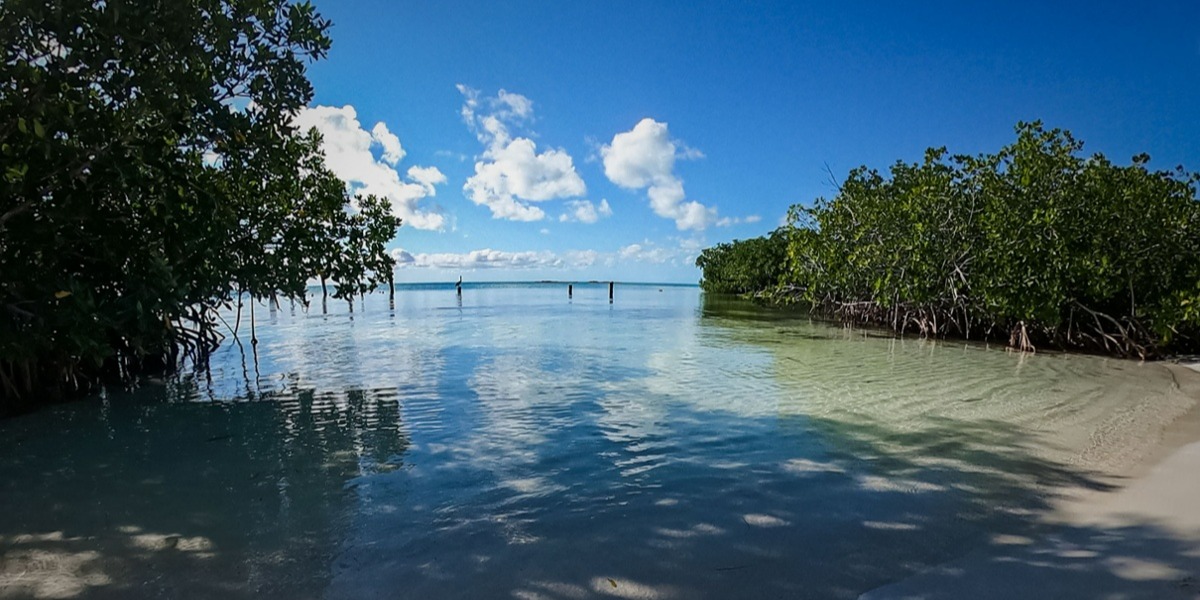
Out of the 50 known mangrove species in the world, in Isla Contoy National Park, you will find 4.
Red mangrove (Rhizophora mangle)
These mangrove species are adapted to survive in high-salinity environments. Its wood is used for medicinal, construction, and melliferous purposes. They can reach 4 to 10 meters in height and have the shape of a robust tree or shrub.
It has multiple roots, and its bark is usually olive-colored with gray spots, although it is reddish inside. Its seed can float and grow, allowing it to disperse.
Black mangrove (Avicennia germinans)
It is also known as mangrove prieto because of the color of the trunk. Its main role is to serve as a natural barrier against the tides, while also sheltering, breeding, and protecting wildlife.
It is between 3 and 10 meters high and has roots that allow it to breathe even when submerged. Because it has lower salt tolerance, this species is usually found behind the red mangrove or in lagoons with less saline water.
White mangrove (Laguncularia racemosa)
This mangrove grows between 12 and 18 meters tall and is found in coastal areas and the inner zones of mangrove belts, farther from the tide than other species. Like the black mangrove, its fruits fall into the water and float for 24 days before taking root.
Its bark is used to treat canker sores, fever, and scurvy for its medicinal, astringent, and tonic properties. The wood is used to build houses and tool handles.
Button mangrove (Conocarpus erectus)
This mangrove is bush-shaped and usually measures between 3 and 6 meters in height, but can reach up to 12 meters. Its trunk can measure between 10 and 30 centimeters in diameter and has thick gray or brown bark.
It is in the endangered species category and is located in the southern part of Isla Contoy on a sandy and muddy substrate.
Distribution of mangroves on Contoy Island
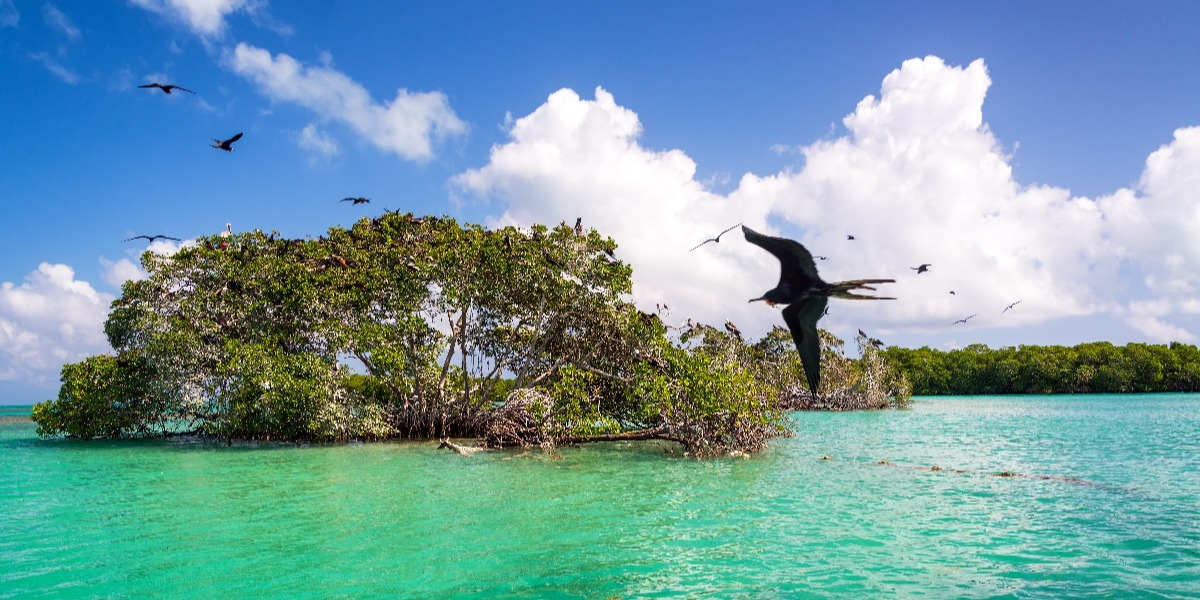
On Isla Contoy, the mangrove is divided into different associations:
Mixed Mangrove: Combines the 4 types of mangrove and is located south of the field station, on the west coast of the island. It develops on light gray sandy and muddy soil that is permanently flooded by seawater.
Red mangrove fringe: It is distributed as a fringe over areas permanently flooded with seawater and is composed only of red mangrove.
Mangrove with black and red mangrove: It is concentrated in the two mounds located at the entrance of Puerto Viejo Lagoon and on the islet within it. This mangrove is small (2 to 4 meters high) and grows on rocky soil bathed by seawater.
Mangrove with black mangrove dominance: This is the most common type of mangrove in Contoy. It is distributed throughout the island, with the greatest extension in the North Aviary and Laguna Muerta. It grows in deep soils and reaches a height of 10 meters and a diameter of up to 20 centimeters.
Black Mangrove: It grows only in the south of the island on sandy-muddy soil, deep and flooded during the rainy season. In this association, there is an arboreal stratum, composed of black mangrove and button mangrove, which reaches up to 30 meters in height, and the herbaceous stratum, which measures only 1 meter.
Importance of mangroves
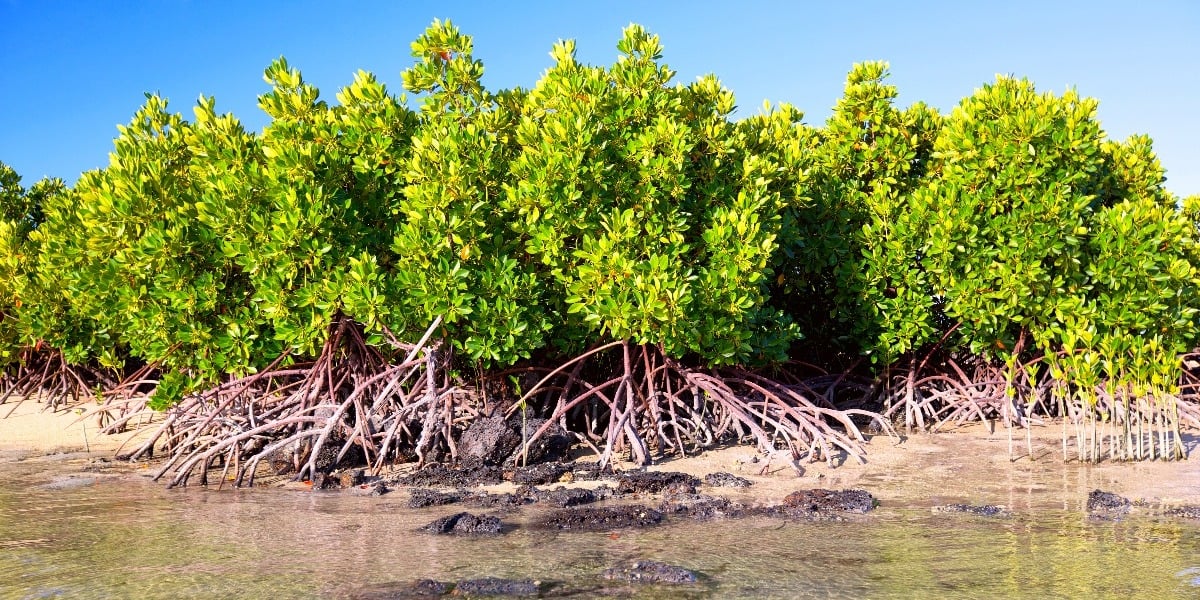
Mangroves are an essential ecosystem for the planet, as they perform functions that maintain biodiversity. These are some of the amazing tasks they perform.
- They are the habitat of fish, crustaceans, birds, reptiles and amphibians.
- They resist flooding and are adapted to survive in freshwater and saltwater environments.
- They catch 4 to 5 times more carbon than other ecosystems.
- Function as natural barriers against storm surges, tsunamis, tidal surges and erosion.
- Facilitate the health of adjacent ecosystems such as coral reefs and forests.
- They purify the ocean and filter water for marine species.
- They are nurseries for fish, corals and even turtles.
- Not only that, but they resist rising temperatures and thus global warming.
Threats facing mangroves
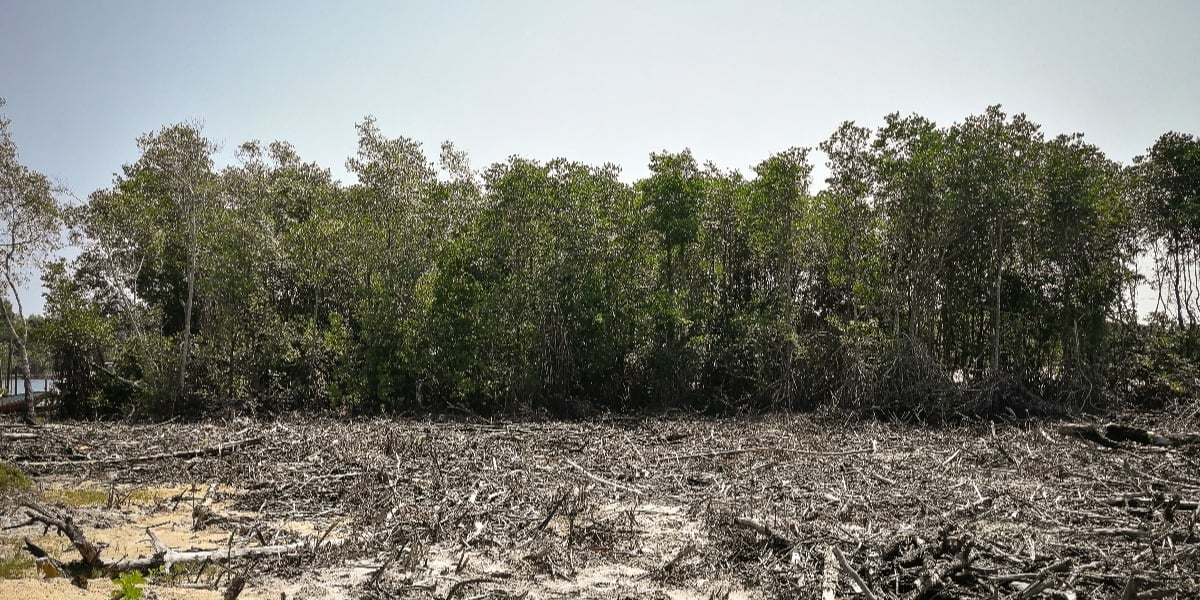
This ecosystem is resilient, yet it has been the intentional and accidental target of human footprint. Here are some of the threats it faces.
- Mangroves have been underestimated for many years in the belief that they, along with swamps, spread disease and breed mosquitoes and other "dangerous" species.
- In the past, mangroves were cut down to create navigation channels to allow boats to pass through.
- Although mangroves tolerate saltwater, rising sea levels can damage specimens that are not as resistant to salinity.
- Deforestation for building construction is one of the main threats, as it not only destroys trees but also introduces services that invade the subsoil.
- The lack of urban development planning pushes people to live near or within mangrove areas.
- Urban polluting wastes that flow into the sea or seep into the land contribute to the poisoning of animal and plant species.
As you will see, most threats are caused by humans, so we must all understand the importance of ecosystems like mangroves.
And now that you have learned more about mangroves, are you ready to visit Isla Contoy and meet them in person? Isla Contoy Experience includes an eco-tour along the island's trails and a visit to the lagoon viewpoint to observe birds and learn about the beauty of these impressive natural formations: the mangroves.





 Diana Gonzalez : Sep 3, 2026, 1:47:08 PM