There are 7 lagoons on Isla Contoy, each playing an important role in the life cycle of the island's species. Read on and learn about these fascinating water bodies.
Compared to other places in the Caribbean, Contoy is a small island that, thanks to the care and protection it receives, continues to have a very diverse ecosystem and remains in a practically pristine state.
It seems hard to believe that on an island only 8 kilometers long and 700 meters wide, there are seven bodies of water; however, they are there, and each one fulfills fundamental functions for developing flora and fauna.
-
None of Isla Contoy's water bodies are freshwater bodies, and none have surface currents. There are also temporary bodies of water that are depressions without vegetation that flood during the rainy season or when the tides are very high.
The seven lagoons of Isla Contoy National Park are:
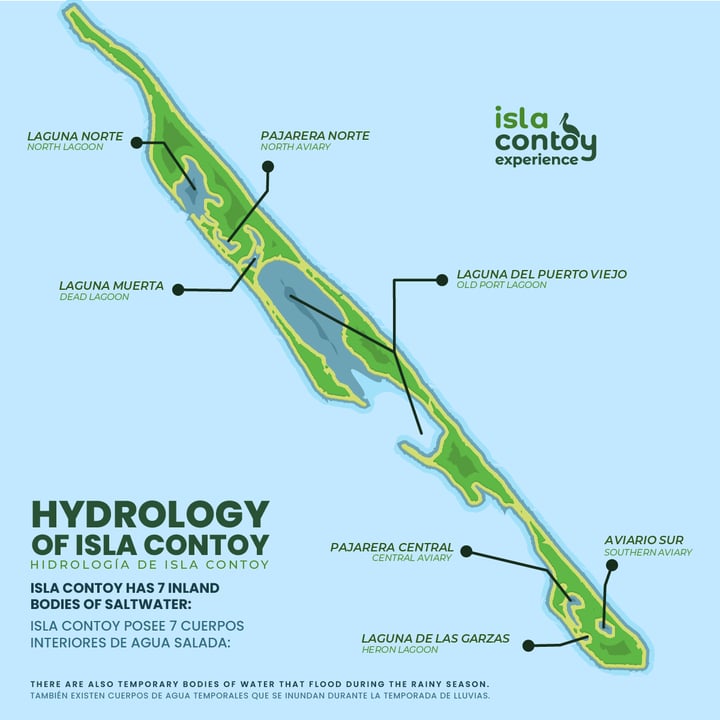
As you will see, some water bodies are named after aviaries because these lagoons and the absence of mammals make this island the most important bird sanctuary in the Mexican Caribbean.
Now, let's take a look at each of the water bodies:
Isla Contoy North Lagoon
The North Lagoon is the second largest on the island. It is connected to the sea by a mouth approximately 8 meters wide, which is surrounded by limestone rocks. Generally, its waters are shallow and of regular transparency. On the southern fringe, a channel connects the North Lagoon with the lagoon called North Aviary (Pajarera Norte).
Pajarera Norte (North Aviary)
This lagoon is of regular size with deep greenish-brown waters and excess phytoplanktonic algae (eutrophication). The color is due to the guano of the birds that nest on its banks and to the decomposition of organic matter from the surrounding mangroves.
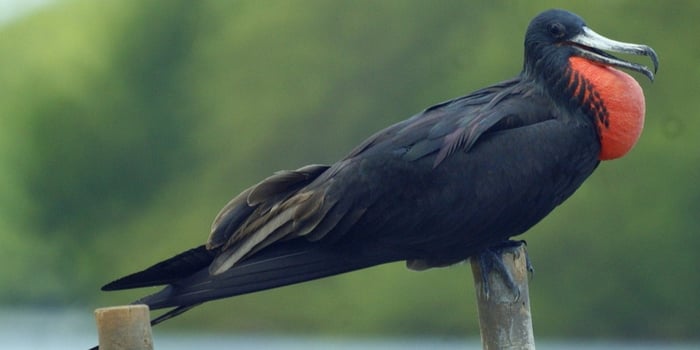
What is guano?
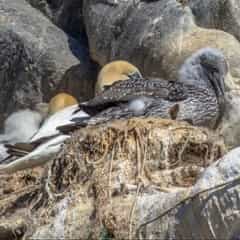
Guano is a substrate composed of excrement from birds and other marine creatures, plants, and natural debris (eggshells, feathers, fish scraps, and nest remains), accumulating in coastal areas. It serves to improve soil fertility and nourish nearby vegetation. Many birds make their nests with this material.
Isla Contoy Dead Lagoon
To the south of North Aviary is the Dead Lagoon, which is drying out. It stands out for having many dead mangrove trunks. Some years ago, this lagoon consisted of two bodies of water joined by a living mangrove channel, but it is currently in a state of siltation (obstruction) and desiccation due to hypersalinization of the soil.
Isla Contoy Old Port Lagoon
Old Port Lagoon is the largest body of water on Contoy Island. It is approximately 6 kilometers long and 500 meters wide. It has three islets in its interior and a depth of 2.62 meters. The waters near the mouth are transparent and become more turbid as you move away from it. The northern part of this lagoon has a higher salinity concentration because there is almost no tidal exchange.
Isla Contoy Central Aviary
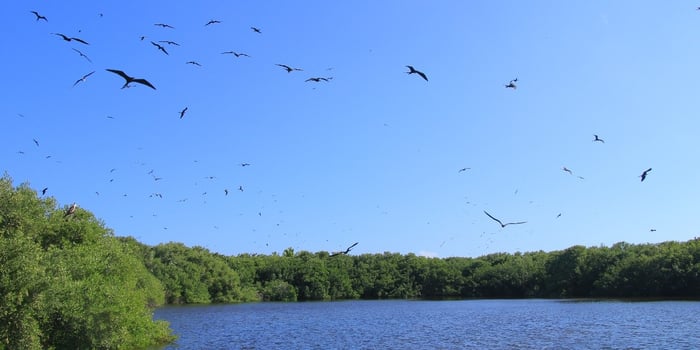
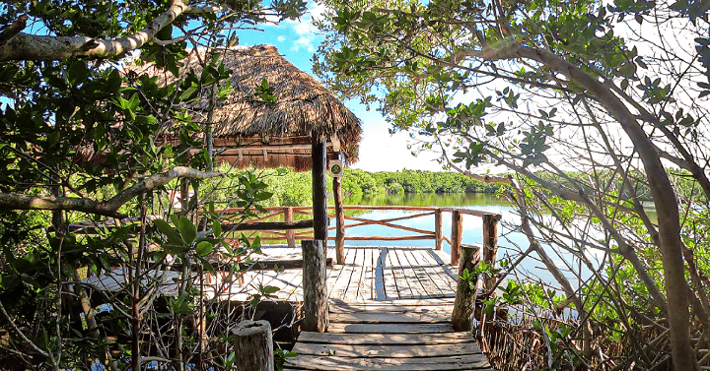
It is located next to the field station of Isla Contoy National Park. It communicates with the sea through a channel shorter than the north aviary but wider and easier to navigate. Near the channel, its waters are clear, but in the eastern part, they are more turbid due to eutrophication. This lagoon has a public viewpoint.
Isla Contoy Heron Lagoon (Laguna de las Garzas)
It is located near the west coast at the southern tip of the island. Its waters are turbid and surrounded by mangroves, except at one end, where there is limestone rock.
-1-1-1.jpeg?quality=low&width=700&height=367&name=02%20-%20HiRes%20-%20Manglar%20-%20Isla%20Contoy%20(1)-1-1-1.jpeg)
Isla Contoy South Aviary
This lagoon has shallow, turbid waters and is completely surrounded by mangroves. It receives water through high tides and mangrove seepage.
These seven bodies of water occupy an area of 8.18 hectares, surrounded by a flooded zone covered mostly by red and black mangroves, part of the flora of Isla Contoy. They are considered endangered species according to the Mexican Official Standard.
Isla Contoy's seven lagoons are crucial to the island's balance. Unfortunately, tourists are only allowed to visit one of them, but we are sure you will understand that this restriction is made to preserve beautiful Isla Contoy.






 Diana Gonzalez : Aug 27, 2026, 4:14:49 PM